People Character Spiky Haired Punk Graphics Freebies
I recently received a brief from a client launching a niche streetwear brand targeting Gen Z. They wanted visuals that screamed rebellion but remained commercially viable for mass production. The mood board was heavy on grunge textures, bold typography, and raw energy. During the asset search phase, I stumbled upon People Character Spiky Haired Punk. As a designer who has spent years refining visual hierarchies for high-stakes campaigns, I don’t just look at aesthetics; I evaluate scalability, editability, and commercial viability. Here is my professional review of this graphic design asset and how it fits into a real-world branding workflow.
First Impressions: Mood and Visual Impact
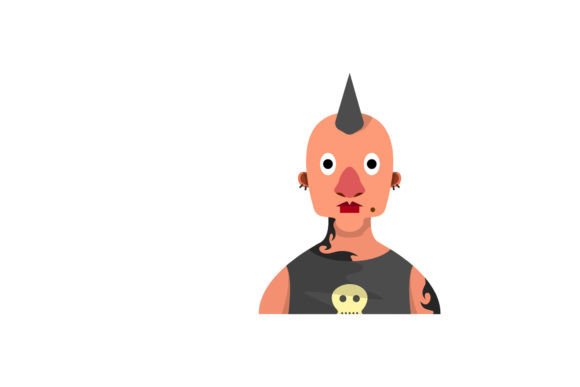
The moment you load the file, the attitude is unmistakable. This isn’t a generic clipart character; it carries a distinct personality. The spiky hair creates immediate verticality in the composition, which naturally draws the eye upward. In terms of style, it bridges the gap between retro punk aesthetics and modern vector illustration. For a small business owner or a handmade business looking to stand out in a crowded creative marketplace, this kind of strong visual identity is invaluable.
The character exudes confidence. It works exceptionally well as a central figure in social media graphics or as a mascot for a sublimation design. However, before committing to this asset for a full brand identity, a designer must consider the tone. It is edgy, loud, and energetic. It does not belong in minimalist corporate materials or conservative editorial design. But for a print-on-demand shop, an Etsy product line focused on alternative fashion, or a local event poster series, the emotional appeal is spot-on.
Technical Versatility Across Formats
One of the strongest selling points of this asset is its format availability. The fact that it is available in AI, DXF, EPS, SVG, JPG, and PNG is a game-changer for cross-platform workflows. When I receive a design bundle like this, I immediately check the vector files first. The AI and EPS formats ensure that the lines remain crisp regardless of scale, which is critical when moving from a digital ad to a large-format banner.
For crafters and Cricut users, the DXF and SVG files are essential. These formats allow for clean cutting paths, ensuring that the intricate details of the spiky hair translate perfectly onto physical substrates like vinyl stickers, t-shirts, or tote bags. The guarantee that these designs are easy to use and can be edited as needed is particularly relevant here. In my experience, many "vector" assets are actually rasterized outlines that cannot be manipulated. If this asset allows for true node editing, it saves hours of tracing time.
The canvas size of 1920 px X 1280 px in each type provides a solid resolution base. While this is sufficient for web use and standard printing, professional designers often need higher DPI for large-scale packaging design. Therefore, relying on the vector source files (SVG, AI, EPS) is non-negotiable if you intend to scale this up significantly without pixelation.
Application in Real Client Projects
Let’s imagine a specific scenario: A boutique clothing label wants to launch a summer collection with a "Rebel Heart" theme. They need marketing visuals for Instagram, packaging inserts, and screen-printed tags.
- Social Media Graphics: The character serves as a perfect hero graphic. Placed against a neon background or a distressed texture, it creates immediate engagement. It works beautifully in Pinterest pins where vertical space is limited but impact needs to be high.
- Packaging Design: On product labels or hang tags, the character adds a tactile feel to the unboxing experience. It transforms a plain cardboard box into a branded object. When used in conjunction with a sans serif font for the brand name, it balances the edginess of the illustration with professional clarity.
- Merchandise: For t-shirt design, the vector nature of the asset ensures clean color separation. Whether using DTG (Direct to Garment) printing or heat transfer vinyl, the clean lines prevent bleeding issues. It also works well as a standalone sticker design for laptop decals or water bottles.
- Digital Products: If you are a digital seller, this asset can be integrated into Canva templates for bloggers or publishers who want to add a pop of personality to their blog posts. It acts as a decorative accent that breaks up text-heavy layouts.
Strategic Placement and Hierarchy
Not every design asset fits every layout. Understanding where People Character Spiky Haired Punk thrives—and where it struggles—is key to maintaining visual trust and recognition.
Best Use Cases:
- Large Layout Areas: Use it as a focal point. Let it breathe. Crowding it with too much text diminishes its impact.
- Decorative Accents: In editorial design or web design, use smaller versions as bullet points or section dividers to inject personality without overwhelming the content.
- Themed Collections: It pairs well with other grunge elements, chains, skulls, or bold graffiti-style fonts.
Areas Caution Is Required:
- Small Sizes: At thumbnail sizes, the fine details of the hair may blur. Always test the asset at 1 inch or smaller to ensure legibility.
- Crowded Layouts: Avoid placing it over complex backgrounds or busy patterns. It competes for attention. Use it on solid colors or subtle gradients.
- Minimalist Branding: If your client’s brand is about clean lines and negative space, this character might clash. It introduces a high level of visual noise that requires careful balancing.
Practical Designer Notes for Commercial Use
Before integrating this graphic design asset into a paid project, run through this checklist:
Contrast and Readability: Preview the asset on both light and dark backgrounds. The character likely has strong black or dark tones, so ensure it pops against your chosen palette. Test it in black and white to verify that the shape holds up without color reliance.
Font Pairing: Typography is half the battle. A handwritten font might compete with the organic spikes of the hair. A display font with sharp edges could complement it, while a classic serif font might create a jarring contrast unless intentionally used for ironic effect. A clean sans serif font usually offers the safest balance for modern design.
File Inspection: Open the SVG or AI file in Illustrator. Check for unnecessary anchor points. Clean up any stray nodes. Ensure that layers are grouped logically so you can easily recolor elements for different merchandise variations.
Commercial License: This is the most critical step. Even though this falls under Freebies, you must verify the license terms. Does it allow for resale? Can it be used in a logo design? Some free assets prohibit inclusion in logos or require attribution. Confirm commercial licensing explicitly before delivering final work to a client to avoid legal complications.
Final Verdict
People Character Spiky Haired Punk is more than just a cute illustration; it is a versatile tool for creating memorable brand identities. Its availability in multiple editable formats makes it suitable for everything from digital ads to physical product mockups. While it demands thoughtful placement to maintain visual hierarchy, its potential to elevate a project’s emotional appeal is significant.
For designers working in streetwear, alternative culture, youth-oriented brands, or creative crafts, this asset earns a place in the toolkit. It brings energy, attitude, and a polished vector finish that meets professional standards. Just remember to respect the license, test the scalability, and pair it with strong typography to let it shine.